
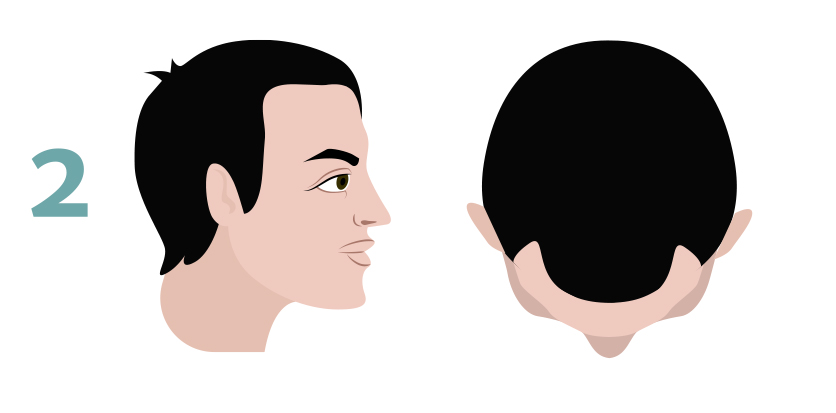
Stage 2
Shows the path to an adult hairline 1.5cm above the upper brow crease. When this happens, hair loss is very mild and mostly happens at the forehead hairline. Similarly, this does not show aging.
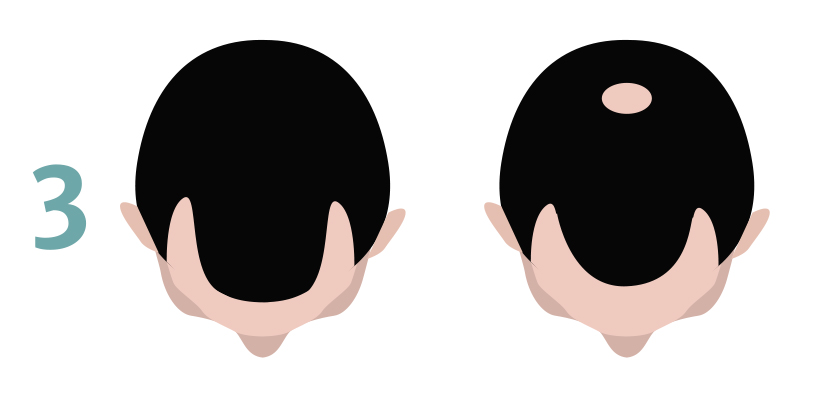
Stage 3
According to this scale, is the first step of male hair loss considered serious enough to be called "baldness"? Most men have a deep, uniform receding at the temples at this point, which is either bald or has very little hair on it. The vertex number here shows that the hair at the top of the head is getting thinner even more. (Fig.3 on the left)
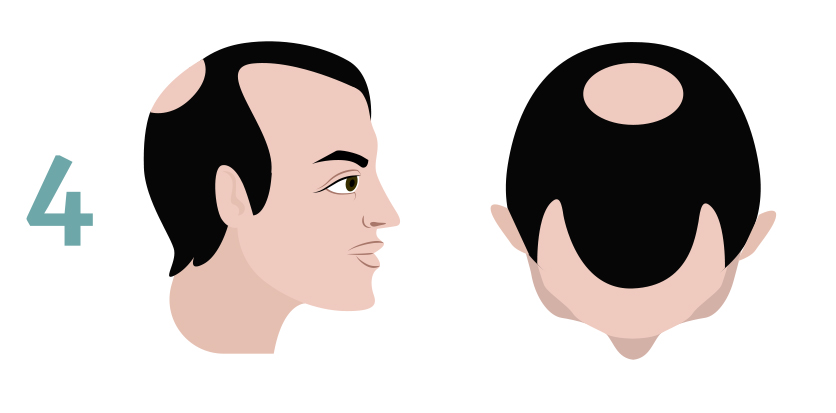
Stage 4
Including a recessing front of the head that gets deeper around the temples. A bridge of relatively dense hair separates hair loss at the front of the scalp from that at the vertex or crown. The hair usually covers the sides of the head effectively.
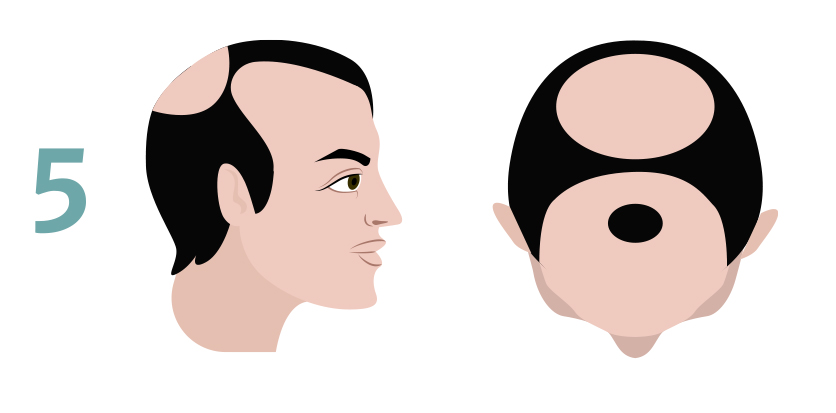
Stage 5
The onset of significant hair loss occurs at this point. The hairline and crown hair loss are separated by a thin, narrow strip. The temporal regions and the crown both exhibit more pronounced and substantial hair loss.
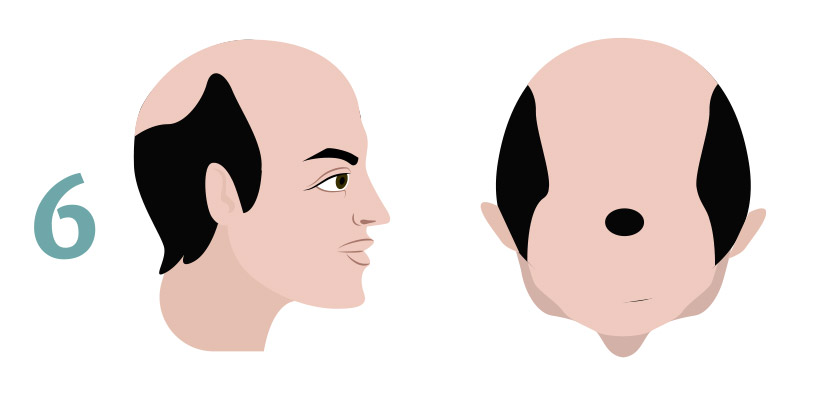
Stage 6
Only a few weak strands may remain of the hair bridge that originally connected the front and crown. The hair that is still there now makes a horseshoe shape around the bald spot in the middle of the scalp. Hair loss on the sides of the head will also worsen.
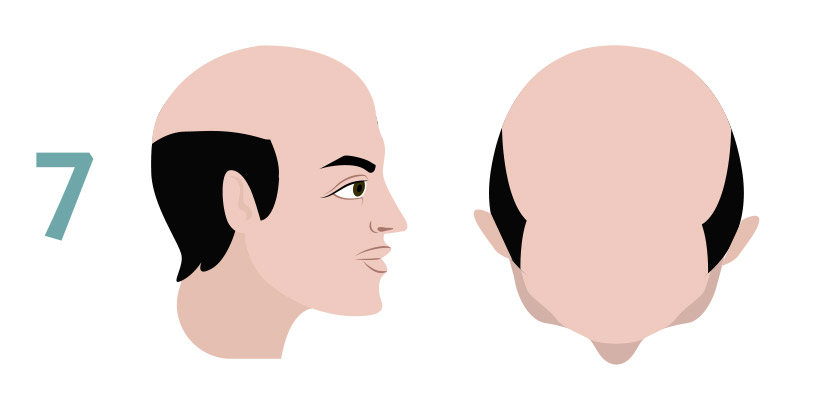
Stage 7
The most severe stage of hair loss leaves only a wreath of thin hair on the sides and back of the scalp.